VIVID

Author name: web

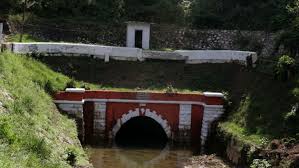
Varkala Tunnel

Varkala Tunnel

Backwaters of Kerala supported a much efficient transport system during the earlier times. It was through the network of backwaters that the goods have been transported from the north to the south of Kerala. Varkala was the southernmost part of this canal system. The travelers had to get down at Varkala and then walk a short distance in order to resume the travel through the backwaters which led to Thiruvananthapuram. It was in order to overcome this difficulty, the British decided to construct a tunnel in Varkala in 19th century. The project took almost 14 years to complete. It began in 1867 under the supervision of Travancore Diwan Sir. T Mahadeva Rao and was completed only in 1880, at the time of Diwan Sheshaya Sasthri. The construction of tunnel was one of the major development works not only of Travancore but also of the entire Kerala during that period. It consists of two tunnels. The first was completed in 1877 while the second was completed in 1880. The first one has about 2370 ft while the second one has 1140 feet length. Once the construction work had been completed, the tunnel was extensively used for ferrying of several kinds of goods. It was a major achievement as with its construction, water transportation from Tirur (of Malabar) to Trivandrum became a reality. Varkala tunnel has been mentioned in one of the earlier Sandesha Kavya (messenger poem) in Malayalam, which is called Mayoora Sandesham. The poet Kerala Varma Valiya Koyi Thampuran talks about the town of Varkala as well as the tunnel built by the British there. With the advent of advanced transportation methods through road, rail and sky, the transportation through Varkala tunnel has almost become negligible.  

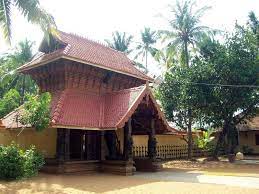
Janardhana Swamy Temple

Janardhana Swamy Temple

One of the ancient temples in Kerala, the Janardhana temple is a major pilgrim spot in Varkala. The temple, which has a history of some 2000 years, is located on a steep hill, at the entrance of the beach road. Ambience and architecture Varkala Janrdhanaswami Temple is popular not only as a pilgrim centre but it also allures everyone with its architectural splendour. The temple faces Papanasam beach and the proximity to the sea adds to its spiritual as well as aesthetic aura. A flight of broad steps lead to the Janardhana temple and on the way, you will be greeted by a high entrance arch with tiled roof. An old banyan tree stands on the temple ground and idols of several serpent gods and goddesses are also installed here. Brightly painted idols of Hanuman, Garuda, Lord Shiva and others greet you once you are about to enter the sanctorum. The main shrine Lord Janardhana (Vishnu) has four arms in which are placed shanghu (the holy conch shell) chakra (wheel), gada (mace) and kumbham (pot). The temple has many attractive features and it has a circular sanctum sanctorum surmounted by a conical dome of copper sheets. The mandapa or pavilion is square in shape and it has wooden carvings of Navagrahas (nine planets) on the ceiling. There is a hall in which the bali peetha is situated and this too is an important feature of the temple architecture. Though the original date of construction of the temple is not available, there are some inscriptions which indicate that the renovation of the temple had been carried out at different periods of history. One of the inscriptions says that the temple was renovated by Umayamma Rani, who ruled this region in the later 17th century. An ancient inscription dated 1252 has also been found on the temple premises. It is seen engraved on the lower part of the mandapa before the temple. Tall granite posts and heavy brass bells hung from ceilings too evoke interest in a connoisseur. The oil trays cut in the granite posts hold lighted wicks during evenings and it is a treat to the eyes. There is a pool called `Chakra Theertha’ on the northern part of the temple which is about 240 ft in circumference. Festival The main festival of the temple Arattu, falls in March/April and it attracts a lot of visitors. Karkidaka vavu too is an important function and the priests of this temple help the devotees perform homage to their ancestors during that day.

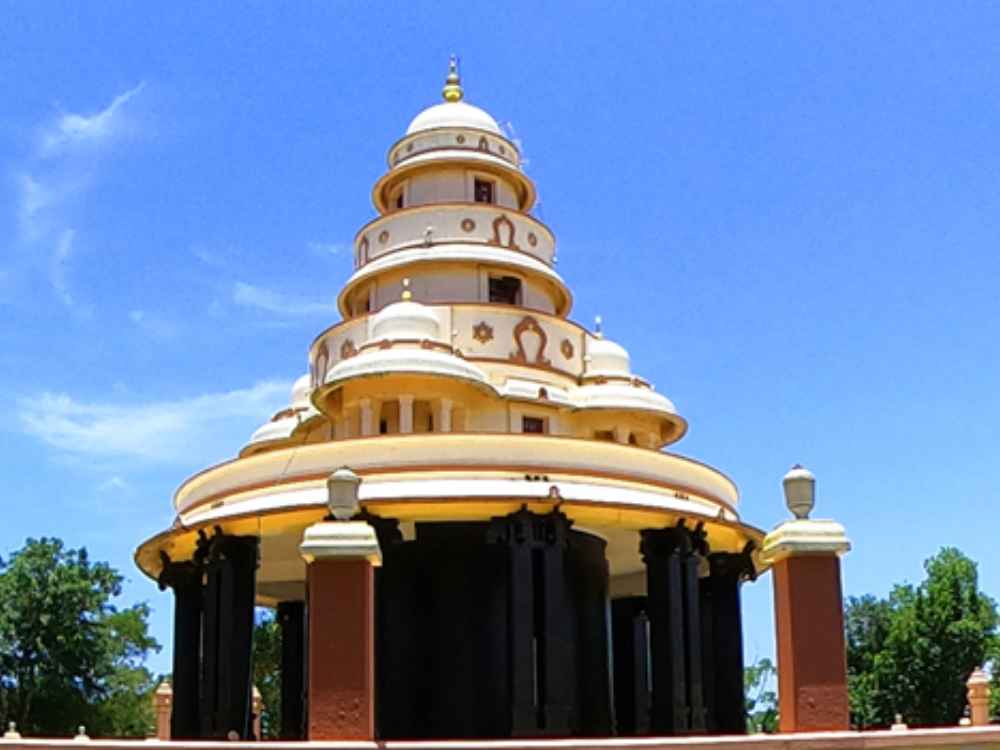
Sivagiri Matt

Sivagiri Matt

One of the major landmarks in Varkala is the Sivagiri Mutt, established by the social reformer Sree Narayana Guru. The hill-top mausoleum of Sree Narayana Guru is one of the most famous monuments in Kerala. Sree Narayana Guru was attracted to this place not only because of its natural beauty and serene surroundings, but was also due to its geographical nature of hill tops and valleys. During the year 1903 Guru used to come to Varkala regularly and rest here in search of Truth. In the beginning he sat near a jack tree. Later Guru made a temporary ‘Parnasala’ and stayed there. On its south side, there was a no man’s land hill; Guru managed to get it registered in his name and established his Asramom on the top of the hill and reside there. The place became known as Sivagiri from then onwards. Sivagiri today has become one of the most sacred centres of pilgrimage for the people from all walks of life irrespective of caste, creed, religion or language. Gandhiji came here thrice – while Swamiji was alive, Gandhiji came to Sivagiri on 12-3-1925 and stayed a day in the Asramom, and twice after Swamiji’s Samadhi. Acharya Vinobabhave visited Sivagiri in 1925 and he proclaimed later that the Guru is an ‘Avathar’. “Sree Narayana Guru is considered as one of the ‘avathars’ that have appeared in India during the last 100 years. Rabindra Nath Tagore, the Great Indian Poet who visited Sree Narayana Guru on Nov 22, 1922, Says that he never come across one who is spiritually greater than Swamy Sree Narayana Guru of Malayalam. He stated that he shall never forget the “ readiant face of Guru illuminated by self effulgent light of divine glory and those yogi’s eyes fixing their gaze on a far remote point in distinct horizon”. In 1903 Guru established a school to teach poor students and a night school for “backward” and “untouchables”. He also started an industrial training centre here to impart job training to the people. Guru wanted Sivagiri as a spiritual centre and ultimately Sivagiri termed to be a centre of everything connected with Guru, his teachings, his message etc. The idol of sarada, the goddess of wisdom and prosperity was installed at Sivagiri in 1912. Thus Sivagiri is a holy hill, where people from all parts of the world meet to seek knowledge, mental love and affection and for blessing of the God for all occasions. With the installation of Siva the place justified its name “Sivagiri”, the mountain of Siva, the pedestal from where all the Godly blessings come to man. According to Guru, spiritual support and sublimation of soul will strengthen natural life. The Mutt campus sprawls over an area of 200 acres and you will surely be attracted by the distinctive multi-tiered white terraces of the mutt, once you enter there. Situated at an elevated plateau, the mutt is considered sacred. It is here that the social reformer and sage Sree Narayana Guru breathed his last in 1928. The Samadhi or the final resting place of the Guru is situated on a hillock here and it attracts thousands of pilgrims. There is also the Guru’s residence and it displays his personal belongings. You can also see a Sharada temple here. The main idol, Goddess Saraswati, here was consecrated by the Guru himself. History Sree Narayana Guru was attracted by the nature’s beauty and the calm ambience at Varkala and built a hermitage on top of the Sivagiri hill in 1904, which later turned out to be a major pilgrim centre. Later the Travancore State Government granted Sivagiri Hill to the Guru and some people near the place also offered land to him. Thus Sivagiri turned out to be the nerve centre of all Sree Narayana Movements. Apart from the Guru, there were many social reformers who helped establish the Mutt at Sivagiri. The socio-political activist of yesteryears Dr. P. Palpu and the renowned Malayalam poet Kumaran Asan were some of them. They were ardent followers of the Guru and had distinct ideas on reformation of the society and Ezhava community. Sree Narayana Guru understood and always stressed on the importance of education. Hence he set up an elementary school here. A night school was also founded for the illiterate people of an untouchable caste. When his disciples wanted to build a temple here, the Guru dedicated it to the Goddess of Knowledge, and consecrated the idol of Goddess Saraswathi here. Thus the Saradha (Saraswathi) temple here came into being in 1912. Architecture and distinctive features of the temple The Sivagiri Sarada temple is octagonal in shape and was planned and designed by the Guru himself. The Sarada temple here has windows, which were very uncharacteristic of a temple. The Guru called it Sarada Mutt and he wanted to dedicate it to Saraswathy, the Goddess of knowledge. The goddess is seated on a white lotus, indicating the knowledge blossoming on purity. The rituals are also is different from that of other temples. While other temples perform nivedyam (offering of food to the deity) or abhishekam (pouring oil, ghee and such on the idol), Sharada temple is devoid of all such rituals, The devotees are free to worship the goddess reciting hymns. Guru, himself a writer and poet, wrote Janani-navaratna Manjari, in praise of the Goddess. Apart from consecrating a symbolic idol and shunning all tantric rituals, the Guru also insisted on keeping high hygiene standards on the temple premises. His followers adhere to the Guru’s words now too and the temple is thus very different from other temples in the world. Festivals The Birthday and Samadhi day of the Guru which fall in August/September are observed at Sivagiri Mutt with much relevance. On Gurudeva Jayanthi day, the birthday of the Guru, colourful processions, debates, seminars, public meetings and cultural shows are conducted. Thousands of followers wearing yellow attire take part in the procession. Another important festival here is Sivagiri pilgrimage which is observed on

About Varkala

Varkala is a coastal town, popularly known as Dakshina kasi is a famous holy place from centuries ago. It is the suburban town of Thiruvananthapuram (Trivandrum City). It is Located 50 Kilometers (Appro.32 miles) north – west of Thiruvanathapuram and 37 Km South- West of Kollam city. Varkala is the only place in southern Kerala where cliffs are found adjacent to the Arabian Sea.[2] These Cenozoic sedimentary formation cliffs are a unique geological feature on the otherwise flat Kerala coast, and are known among geologists as Varkala Formation and a geological monument as declared by the Geological Survey of India. There are numerous water spouts and spas on the sides of these cliffs. Varkala is also famous for the 2,000-year old Janardana Swami Temple which is an important Vaishnavaite shrine in India and is often referred to as Dakshin Kashi (Benares of the South).[3] The temple is located close to the Papanasam beach, which is considered to have holy waters which wash away sins, and is also an important Ayurveda treatment centre. The temple has an ancient bell removed from a shipwreck, donated by the captain of the Dutch vessel which sank near Varkala without causing any casualties. The place was also called Udaya Marthandapuram, commemorating the contributions of Udaya Marathanda Varma, a Travancore King, to the development of Varkala. The king in 1762 built rows of houses in the obscure sea side village of Varkala in order to make the local Brahmins settle here. There are several stories and legends related to the birth of this place. One such story is related to the construction of the Janardhana Swami temple. Lord Brahma instructed one of the Pandyan Kings to build a temple in order to redeem his souls from the sins he has committed. In his dreams the king received a prophecy which suggested Varkala as the location to build the temple. The name of the place is attributed to another legend of Sage Narada. According to this legend, Sage Narada was visited by the nine prajapathis who told him that they had sinned. He threw his valkalam (garment made of tree bark) to earth. Narada told the prajapathis to go there and pray for their redemption. Since then the scenic village were the valkalam fell was called by the name Varkala (derived from valkalam). Varkala was known to ancient foreign traders, says many historical documents. The place had been referred to as `Balita’ in The Periplus of the Erythraean Sea, the ancient Greek manuscript describing navigation and trading opportunities. Topography Varkala has a distinctive topography and this itself is the highlight of the place. It not only harbours the scenic charm of a calm beach, but attains a majestic quality with the towering laterite cliffs along the beach. Standing like sentinels overlooking the turbulent sea, the cliffs provide the best enchanting view of the sea. The wide plateau of the cliffs also houses many hotels and restaurants. You can see long winding roads from Varkala town which leads to one of the higher cliffs, where a helipad has been built. The laterite cliffs, the golden sands and the rolling waves of the sea provide a unique charm to the place and its unique geological formation attracts a lot of geologists too to this place. The cliffs also harbour natural springs and they are believed to have medicinal qualities. You can see a lot of people taking bath in the medicinal springs. The beach here is called Papanasam beach which is believed to wash away sins. During monsoons, the place is less frequented by tourists due to sea erosion and heavy downpour. Kappil Beach, another major attraction in Varkala, is situated a few kilometres away and it also draws large crowd. The beauty of Varkala is enhanced by the presence of backwaters at some places and Ponnumthuruthu Island, surrounded by backwaters near Varkala is another hot tourist spot. A boat ride through the backwaters, watching the vegetation on either side is a delightful experience. Varkala town is well connected through road, rail and waterways to Thiruvananthapuram and Kollam. Water transport, which was the main means of travel during earlier times, has now become almost out of use. Climate Varkala has a moderate humid climate, with temperature ranging from 30 to 36 degree Celsius. It experiences heavy rains from June to August (Southwest Monsoon) and the average rainfall is 310cm. with heavy rains during June-August due to the southwest monsoon. The best season to visit the place is October to February. Major Landmarks

Kerala at a Glance

Kerala at a Glance With the Arabian Sea in the west, the Western Ghats towering 500-2700 m in the east and networked by 44 rivers, Kerala enjoys unique geographical features that have made it one of the most sought after tourist destinations in Asia. An equable climate, a long shoreline with serene beaches, tranquil stretches of emerald backwaters, lush hill stations and exotic wildlife, waterfalls, sprawling plantations and paddy fields, ayurvedic health holidays, enchanting art forms, magical festivals, historic and cultural monuments, an exotic cuisine, all of which offers a unique experience altogether. Kerala, India’s most advanced society has a hundred percent literacy rate. World-class health care systems, India’s lowest infant mortality and highest life expectancy rates, the highest physical quality of life in India, peaceful and pristine, Kerala is India’s cleanest state. Geography With the Arabian Sea in the west, the Western Ghats towering 500-2700 m in the east and networked by forty-four rivers, Kerala enjoys diverse geographical features. Kerala is divided into three geographical regions: Highlands, which slope down from the Western Ghats onto the Midlands of undulating hills and valleys into an unbroken coastline with many picturesque backwaters, interconnected with canals and rivers. The Western Ghats are nowhere more than 120 kms from the sea. Seasons Bestowed with a pleasant and equable climate throughout the year, Kerala is a tropical land with the coast running down its entire length and the Western Ghats forming a protective barrier against the dry winds from up north. The monsoons (June-September & October-November) and summer (February-May) are the seasons markedly experienced here, while winter is only a slight drop in temperature from the normal range of 28-32°C. History Kerala’s history is closely linked with its commerce, which until recent times revolved around its spice trade. Celebrated as the Spice Coast of India, ancient Kerala played host to travelers and traders from across the world including the Greeks, Romans, Arabs, Chinese, Portuguese, Dutch, French and the British. Almost all of them have left their imprint on this land in some form or the other – architecture, cuisine & literature. Location Kerala is situated on the southwestern coast of India, a country in South Asia. This tropical paradise enjoys a unique topography with Arabian Sea, a part of the Indian Ocean on the west and the Western Ghats on the east.  

Scroll to Top